Fullstack Engineer
Internal Tools & Enterprise Workflows
I build production-grade platforms that operations teams actually rely on — with proper multi-tenancy, role-based access control, and CI/CD from day one.
About
I specialise in fullstack development for internal tooling — service desks, workflow platforms, and multi-tenant SaaS products used inside organisations.
My focus is production readiness from the start: clear data models, proper access control, observable deployments, and UIs that don't get in the way of the people using them.
SupportOps is my flagship side project — an end-to-end service request platform built with Next.js, NestJS, PostgreSQL, and Redis, deployed on a real server with Docker and Nginx.
Core Skills
Frontend
- Next.js 16 (App Router)
- React 19
- TypeScript
- MUI 7
Backend
- NestJS 11
- Prisma ORM
- PostgreSQL 16
- Redis / BullMQ
Infrastructure
- Docker
- Nginx
- GitHub Actions
- Let's Encrypt SSL
Architecture
- pnpm Monorepo
- Turborepo
- Multi-tenant SaaS
- RBAC
Featured Project
SupportOps
Enterprise-grade internal service request management platform
A multi-tenant platform for managing service requests across an organisation. Built with four distinct roles, SLA tracking, escalation rules, file attachments, email notifications, and full audit trails — from scratch.
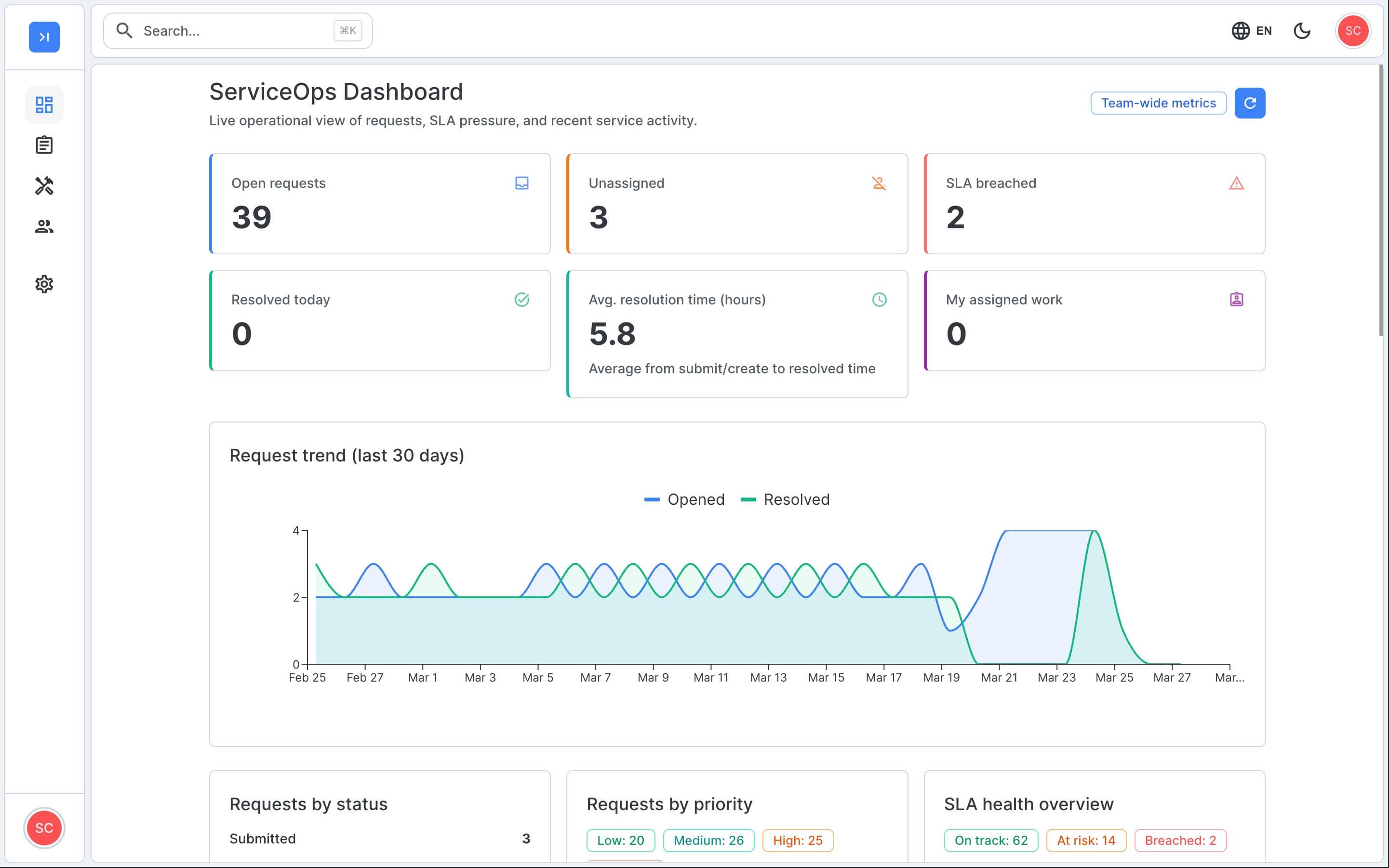
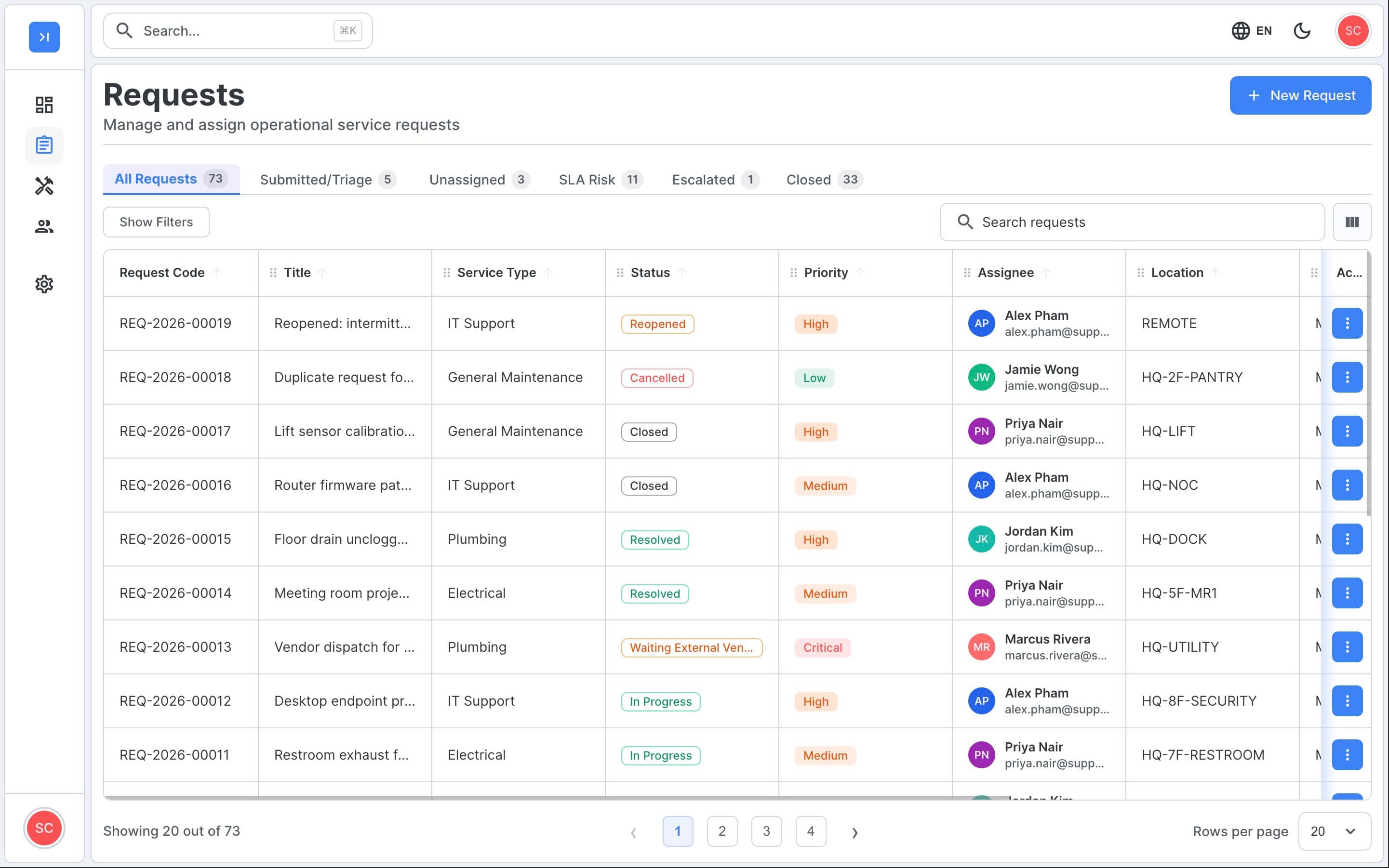
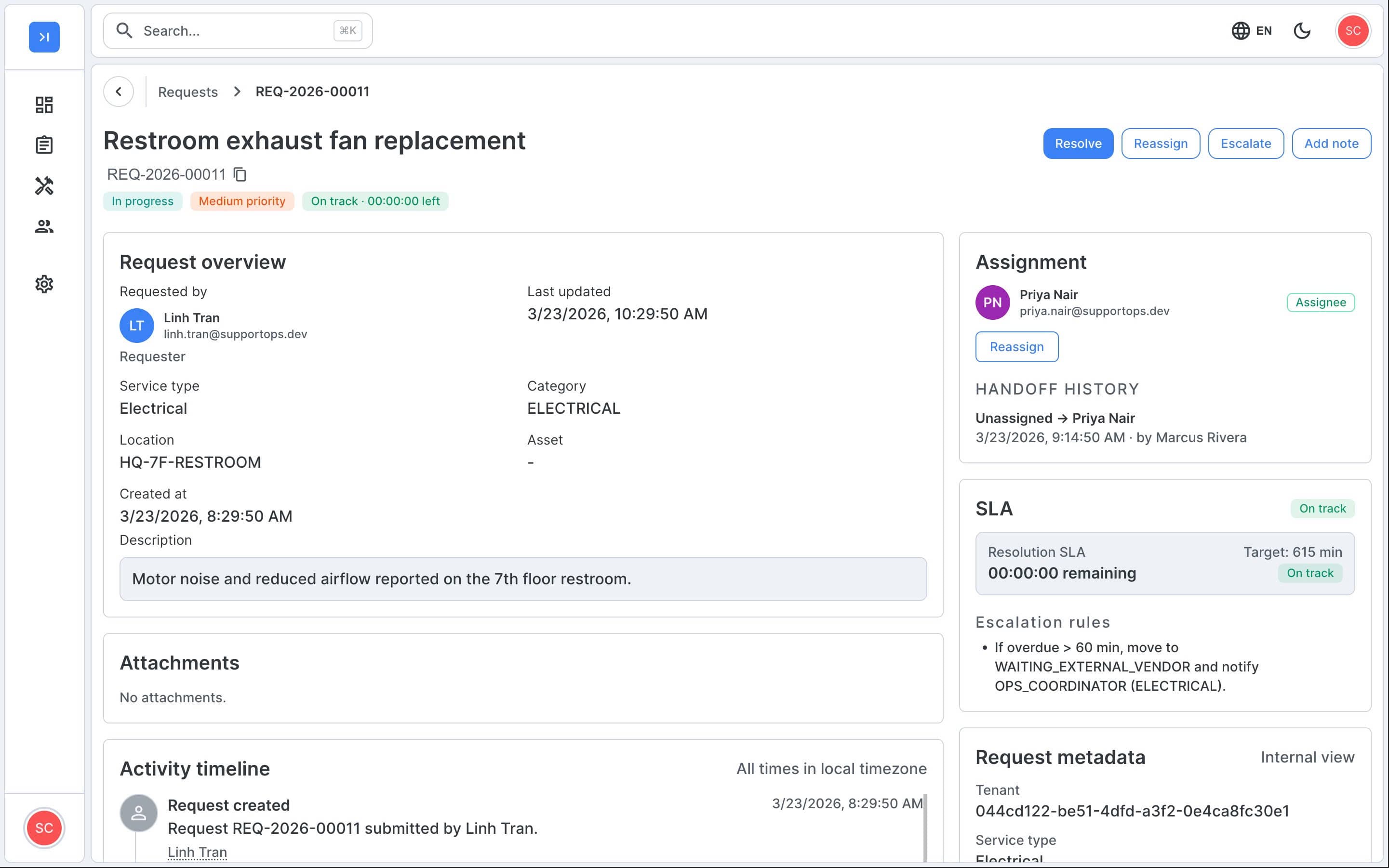
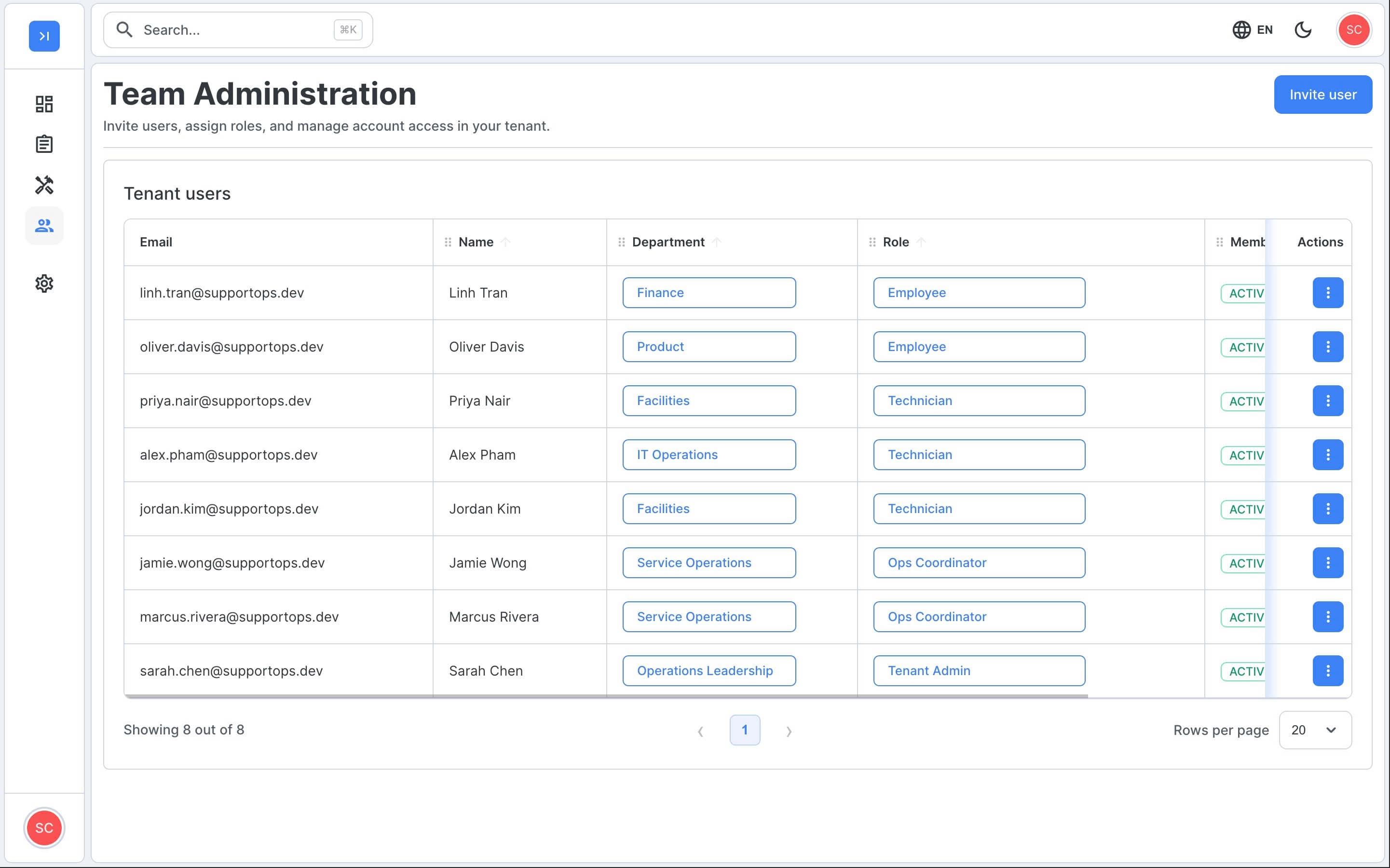
What This Project Demonstrates
Multi-tenant architecture
Row-level tenant isolation in PostgreSQL. Every query is scoped to the current tenant — no data leakage across organisation boundaries.
Role-based access control
Guards at the NestJS layer and conditional rendering on the frontend. Roles determine visible data and permitted actions throughout the stack.
Production deployment pipeline
GitHub Actions builds Docker images, pushes to GHCR, deploys via SSH, runs Prisma migrations, auto-seeds on first deploy, then smoke-tests before completing.
Monorepo with shared packages
pnpm workspaces and Turborepo coordinate builds across API, web, worker, and shared packages. Type contracts shared via a dedicated types package.
Background job processing
BullMQ on Redis handles email notifications and SLA escalation scheduling — decoupled from the HTTP request/response cycle.
Clean API design
RESTful NestJS API with OpenAPI docs, Prisma-managed schema migrations, JWT auth with refresh token rotation, and rate limiting via @nestjs/throttler.
Try the Demo
The demo runs on a real server with a real database. Each role has a separate account so you can explore the platform from different perspectives.
| Role | Can do | |
|---|---|---|
| Tenant Admin | sarah.chen@supportops.dev | Full platform control — manage team members, tenant settings, and all service requests |
| Ops Coordinator | marcus.rivera@supportops.dev | Assign and oversee service requests, manage SLA rules and escalation policies |
| Technician | jordan.kim@supportops.dev | Work on assigned requests, update progress status, and add activity notes |
| Employee | oliver.davis@supportops.dev | Submit service requests, track progress, and communicate via activity thread |
Password for all accounts: SupportOps@123
Technical Snapshot
View source on GitHub| Frontend | Next.js 16 · React 19 · MUI 7 · App Router · Standalone build |
| Backend | NestJS 11 · Prisma 6 · PostgreSQL 16 · JWT + Refresh tokens |
| Queue | BullMQ · Redis 7 · async jobs for email & SLA escalation |
| Infrastructure | Docker · Nginx 1.27 · Let's Encrypt · pnpm 9 · Node 20 |
| CI/CD | GitHub Actions · GHCR image registry · SSH deploy · Turbo build cache |
| Architecture | pnpm monorepo · Turborepo · shared types package · shared UI library |
Get in Touch
I'm open to fullstack engineering roles, particularly in internal tooling, enterprise SaaS, or platform engineering. Feel free to reach out.